Third Party Tested Peptides in Canada: What Each Test Measures
Almost every supplier of third party tested peptides in Canada uses the same phrase, and it covers a very wide range of evidence. At one end is a full report with a chromatogram, a mass spectrum and a stated method. At the other is a single percentage on a PDF. For procurement and QC teams approving large orders, the useful skill is knowing which questions each test can answer, and spotting which ones a given certificate leaves open. This guide is organised around those questions rather than around the instruments.
Five questions a certificate should answer
Before looking at any specific technique, it helps to list what a buyer actually needs to know about a lot:
- Is the material the compound named on the label?
- How much of the peptide material is that compound, rather than related impurities?
- How much of the weighed powder is peptide at all?
- Which sample was tested, and how does it relate to the vials I received?
- What was not tested?
No single test covers all five. The table below maps the common analyses to the questions they address.
| Analysis | Answers | Does not answer |
|---|---|---|
| Mass spectrometry (MS) | Identity: is the molecular mass correct? | How much impurity is present |
| Reversed-phase HPLC with UV | Purity: share of detected peak area in the main peak | Identity on its own; peptide content by weight |
| Amino acid analysis or nitrogen content | Net peptide content | Which impurities are present |
| Karl Fischer titration | Residual water | Anything about the peptide itself |
| Endotoxin and sterility assays | Microbial and endotoxin burden | Identity or purity |
Third party tested peptides in Canada: identity by mass
MS measures the mass of the molecule and compares it with the value calculated from the sequence. Close agreement is strong evidence of identity, because most things that go wrong in peptide synthesis or storage move the mass by a recognisable amount:
- A missing residue lowers the mass by that residue’s weight, for example about 57 Da for glycine.
- Oxidised methionine adds 16 Da.
- Deamidation of asparagine or glutamine adds just under 1 Da.
- A free C-terminal acid in place of an amide adds just under 1 Da.
- A leftover tert-butyl protecting group adds 56 Da.
- A cyclic peptide whose ring failed to close weighs about 18 Da more than the finished ring.
The small shifts, under one dalton, need adequate instrument resolution to see. A certificate that rounds the mass to a whole number cannot rule them out.
Purity by HPLC, and the wavelength behind it
HPLC separates the components of a sample and a UV detector records each one as a peak. The purity figure is the main peak’s area as a share of the total detected area. Two points shape how far that number can be trusted.
First, it is an area ratio, not a weight ratio. Different molecules absorb UV light differently, so equal amounts do not always give equal areas. The convention is widely used and generally reasonable, but it is an approximation.
Second, the detector only sees what absorbs at the chosen wavelength. Around 214 to 220 nm, the peptide bond absorbs, so nearly every peptide species is detected. At 280 nm, only aromatic residues such as tryptophan and tyrosine contribute. A peptide without aromatics, and most of its impurities, all but vanish at 280 nm, which can make a sample look purer than it is. The wavelength should be printed on the report, and it is worth checking every time. Our guide to reading an HPLC chromatogram shows what to look for on the trace itself.
How much of the powder is peptide
Purity and quantity are separate questions. A lyophilised peptide is a salt, and the weighed powder also contains counter-ions and residual water.
Counter-ions
Most peptides are purified using trifluoroacetic acid, and the trifluoroacetate stays bound to basic groups on the peptide. Some are exchanged to acetate afterwards. Either way, the counter-ion is an expected component, not a synthesis fault, but it adds weight that is not peptide. See TFA and acetate salt forms for how the two differ.
Water
Freeze-drying leaves some moisture behind, and the powder can pick up more if a cold vial is opened in humid air. Karl Fischer titration measures it directly; water content in lyophilised peptides explains the method.
Net peptide content brings those together into one figure: the share of the powder that is peptide. It is the number to use when calculating concentrations across a series of vials, and it is often missing from routine certificates. The net peptide content article covers how it is measured.
Which sample was tested
Every analytical result describes the specific sample the lab received. How well it represents your vials depends on how that sample was chosen and handled. A supplier-selected vial sent directly to a lab tells you about that vial and, by reasonable inference, the lot it came from. A vial you pulled at random from your own received stock tells you about the material actually in your cold room. Both are legitimate; they are different kinds of evidence. Our article on third-party versus in-house testing discusses the trade-offs, and the piece on ISO 17025 accreditation covers what a testing lab’s credentials do and do not add.
What routine testing leaves out
A standard identity and purity report does not address sterility, endotoxin, heavy metals or residual solvents unless those assays are listed on it. Their absence simply means they were not run. Reading a purity percentage as a broader statement about the material is the most common misreading of a certificate. The limits are covered in endotoxin, sterility and research grade.
Differences between two labs’ figures for the same lot are also normal. Column, gradient, wavelength and integration settings all move the result; why certificates disagree sets out the usual reasons.
Verifying a volume order yourself
Labs buying in quantity are well placed to run their own confirmation. Pick vials at random from the received lot rather than the first ones out of the box, keep a few sealed vials as retained samples, and send one to an analytical lab with a request for the full chromatogram, the detection wavelength and an MS identity result. Record which vials went where in your inventory log.
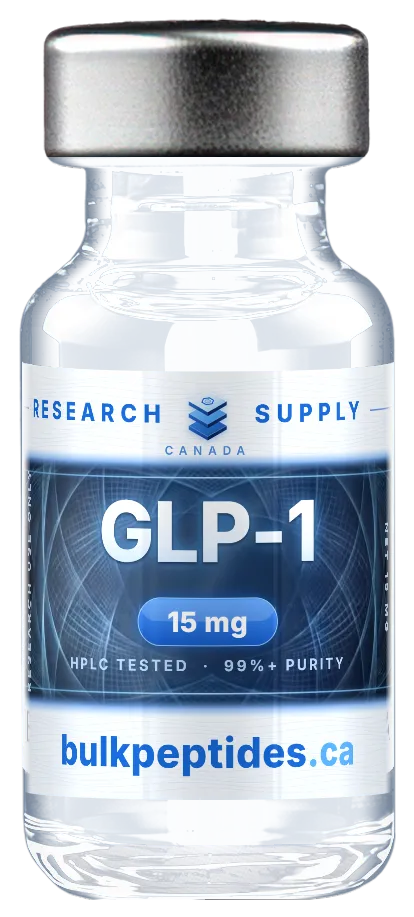
At Bulk Peptides, products are third-party tested for purity by HPLC. Certificates are published for some products on our certificates of analysis page, and the cap and crimp colour on each vial tells you which certificate it belongs to. If an independent result differs from ours, the purity guarantee explains what happens next.
All Bulk Peptides products are for in-vitro laboratory research only. Test results describe analytical properties of the material and say nothing about suitability for use in humans or animals, which is not permitted.