Karl Fischer Titration for Peptides: Measuring Residual Water
A freeze-dried peptide looks bone dry, but the fluffy cake at the bottom of the vial still holds a measurable amount of water. That water adds to the weight you pay for, dilutes the peptide you think you are weighing, and gives degradation chemistry somewhere to happen. Karl Fischer titration for peptides is the standard way to put a number on it. This article explains where the water sits, how the titration works, how it compares with loss on drying, and how a lab receiving many vials of the same lot can use the figure in its own calculations and storage decisions.
Where the water hides in a freeze-dried cake
Lyophilisation removes ice by sublimation and then drives off more water during a warmer secondary drying stage. What it cannot easily remove is water held by hydrogen bonds to polar groups on the peptide and its counter-ions. Charged side chains, the backbone amides and salts such as trifluoroacetate or acetate all attract and hold water molecules.
Two further points matter in practice:
- The cake is hygroscopic. Once a vial is opened, the powder pulls moisture from room air. The longer it sits open, and the more humid the room, the more it gains.
- The figure is sequence dependent. Peptides rich in charged or polar residues, and those carrying more counter-ions, tend to hold more water than short hydrophobic ones.
Residual water in a well-dried peptide usually falls in the low single-digit percentages by mass, though the exact value depends on the sequence and the drying cycle.
How Karl Fischer titration for peptides works
The method rests on a reaction in which iodine and sulfur dioxide react with water in the presence of a base and an alcohol. Water and iodine are consumed in a fixed ratio, so measuring the iodine used gives the water present. The endpoint is detected electrically when free iodine first appears.
There are two formats:
- Volumetric KF. A titrant containing iodine is added from a burette. It suits samples with more water and larger sample masses.
- Coulometric KF. Iodine is generated electrochemically inside the cell, and the charge passed is converted to water. It can detect microgram amounts, which makes it the usual choice for the small sample sizes available from peptide lots.
Where a sample dissolves poorly or reacts with the reagent, an oven attachment can heat it and carry the released water into the cell on a dry gas stream.
KF versus loss on drying and TGA
Certificates sometimes report water by other methods, and the figures are not interchangeable.
| Method | What it measures | Main limitation for peptides |
|---|---|---|
| Karl Fischer titration | Water specifically, by chemical reaction | Some functional groups can interfere; needs careful sample handling |
| Loss on drying | All mass lost on heating, including residual solvents | Reads high if acetonitrile, acetic acid or other volatiles are present |
| Thermogravimetric analysis | Mass loss as temperature rises, recorded as a curve | Water and other volatiles overlap unless coupled to a gas analyser |
When a certificate lists a water figure, note which method produced it. Loss on drying and KF results from two lots are only comparable if the same technique was used for both.
Sources of error in the titration
Most bad KF results come from sample handling rather than the instrument.
- Moisture pickup during weighing. A hygroscopic powder gains water every second it is exposed. Weighing in a low-humidity enclosure or glove bag, and working quickly, limits the error.
- Small sample mass. Peptide samples are often a few milligrams. Balance precision and static become significant at that scale.
- Background drift. The cell must be conditioned and its drift measured and subtracted, or ambient moisture is counted as sample water.
- Chemical interference. Free thiols, as in cysteine-containing sequences, can react with iodine and push the result upward. Oven-based KF or an interpretive note on the report helps in those cases.
Putting the number to work: mass balance and concentration
The main use of a water figure is accounting for what is actually in the vial. Gross powder mass is roughly peptide plus counter-ion plus water, with minor residual solvent. If you know the water content and the counter-ion content, the remainder approximates the peptide fraction. That fraction is closely related to the net peptide content figure discussed in our article on net peptide content, and the counter-ion side is covered in TFA and acetate salt forms.
For work where molar concentration matters, the label mass is not a safe basis on its own. Use a reported net peptide content where one exists, or quantify the dissolved stock directly by UV absorbance for sequences containing tryptophan or tyrosine, or by amino acid analysis for any sequence.
Water and stability in stored material
Water is also a reactant. Backbone hydrolysis needs it, deamidation of asparagine and glutamine proceeds faster with it, and higher moisture raises molecular mobility in the solid, which speeds several other reactions. A drier cake generally keeps longer, which is one reason lyophilised material outlasts solutions by such a wide margin.
Handling a multi-vial lot to keep water down
For labs holding many vials of one lot, some simple habits keep the water figure close to what was measured at release:
- Leave vials sealed until they are needed; an unopened crimped vial protects the cake far better than any secondary container.
- Let a cold vial reach room temperature before opening, so condensation does not form on the powder.
- Store vials cold and dark, with desiccant in the secondary container.
- If a vial will be weighed from repeatedly, record each opening, since its water content will creep upward. See weighing hygroscopic lyophilised powders.
- Where lot-to-lot comparisons matter, send a sealed vial from each lot for KF by the same method at the same lab.
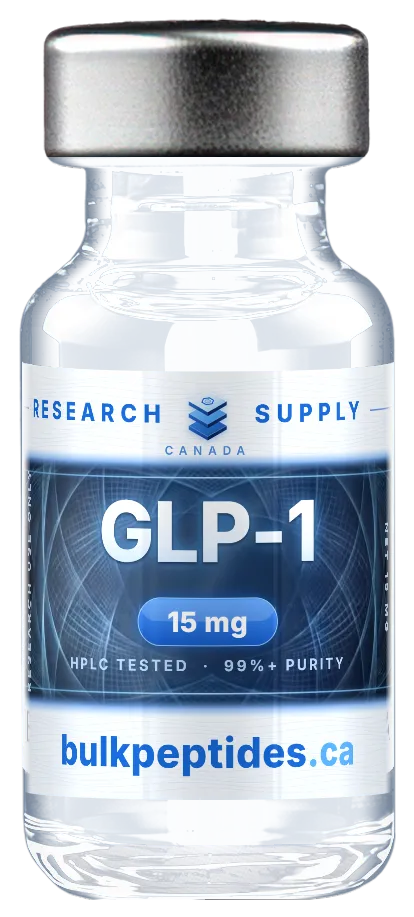
Our products are sent for third-party HPLC purity testing, and certificates for some products are posted on our certificates of analysis page. A vial’s cap and crimp colour identifies the certificate it belongs to, which makes it easy to file any water result you commission yourself against the right lot.
Bulk Peptides supplies these materials for analytical and in-vitro laboratory work only. They are not for human or animal use.