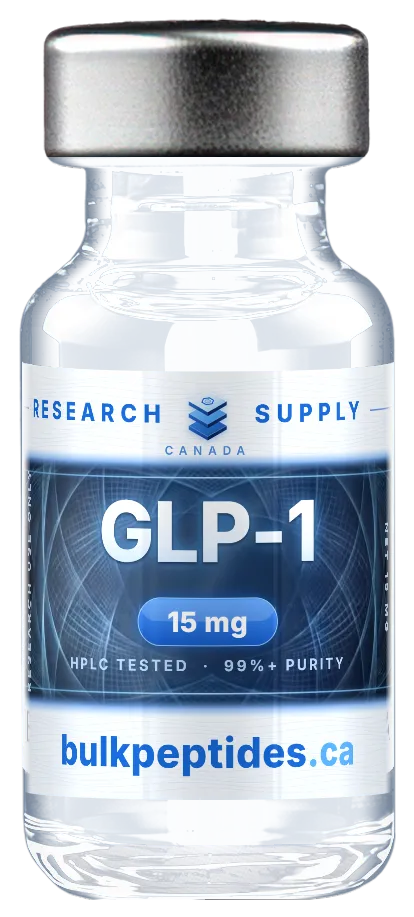
Peptide Endotoxin Testing and What “Research Grade” Leaves Out
“Research grade” sounds like a standard, but no regulator or pharmacopoeia defines it. In practice it describes material characterised for identity and chromatographic purity, and it says nothing about several contaminants that can matter a great deal in cell-based work. Peptide endotoxin testing is the clearest example: a vial can pass HPLC with an excellent figure and still carry enough bacterial lipopolysaccharide to trigger a strong response in an immune cell assay. This article sets out what a typical purity report leaves out, how endotoxin and sterility are actually tested, and how a lab buying research peptides in volume can decide when the extra data is worth commissioning.
What a purity report measures, and what it does not
A standard certificate for a research peptide answers a narrow set of questions very well. Everything else sits outside it unless an additional assay is listed.
| Usually covered | Usually not covered unless stated |
|---|---|
| Identity by mass spectrometry | Bacterial endotoxin |
| Chromatographic purity by HPLC | Sterility or viable microbial count |
| Sometimes net peptide content | Residual organic solvents |
| Sometimes water content | Counter-ion level and elemental impurities |
HPLC purity is a ratio among peptide species. Anything that is not a peptide, or that does not absorb at the detection wavelength, is invisible to it. That includes lipopolysaccharide, microorganisms and most solvents.
Endotoxin: the contaminant HPLC cannot see
Endotoxin is lipopolysaccharide from the outer membrane of Gram-negative bacteria. It can enter a peptide preparation from water, reagents, equipment or handling at any stage. Three properties make it troublesome:
- It is heat stable. Normal autoclaving does not reliably destroy it, and it survives freeze-drying intact.
- Filtration does not remove it. A 0.22 µm filter retains bacteria, but endotoxin passes through largely unaffected, so a filtered stock can be free of organisms and still contain it.
- Cells respond to tiny amounts. Immune cells detect it through Toll-like receptor 4, and cytokine release, NF-κB reporter activity and macrophage activation can all be driven by contamination rather than the compound under study.
The risk is a false positive that looks like a genuine compound effect. For any readout involving inflammation or innate immunity, an untested lot is an uncontrolled variable.
How endotoxin is measured
Most testing uses reagents derived from horseshoe crab blood, known as LAL assays, or a recombinant factor C assay that avoids the animal-derived reagent. The main formats:
- Gel-clot. A pass or fail result at a set sensitivity; simple but not quantitative.
- Kinetic turbidimetric. Measures the rate at which the reaction mixture becomes cloudy.
- Kinetic chromogenic. Measures colour development from a synthetic substrate, and is the common choice for quantitative results.
Results are reported in endotoxin units, normally per milligram of peptide or per millilitre of solution. Peptides can interfere with these assays. Cationic sequences in particular can bind lipopolysaccharide and mask it, giving a falsely low reading. A credible result therefore includes a spike recovery check, where a known amount of endotoxin is added to the sample and must be recovered within an accepted range.
Sterility is a separate question
Endotoxin and sterility are often confused, but they measure different things. A sterility test asks whether viable organisms are present. An endotoxin test asks whether a particular bacterial molecule is present, alive or dead. The two can disagree in both directions:
- A solution that once held Gram-negative bacteria, later filtered or killed, can be sterile yet high in endotoxin.
- A vial contaminated with Gram-positive organisms or fungi can be non-sterile yet low in endotoxin.
Lyophilised research peptides are not sold as sterile products. Labs that need sterile working solutions for cell culture usually prepare them under aseptic conditions and filter the stock, keeping in mind that filtration handles organisms but not endotoxin.
Residual solvents and synthesis reagents
Solid-phase synthesis and purification leave traces of their chemistry: trifluoroacetic acid, acetonitrile, and scavengers from the cleavage step. These are usually present at low levels, and HPLC purity does not report them. They are measured by other techniques, such as headspace gas chromatography for volatile solvents and ion chromatography for counter-ions. For cell work, the TFA counter-ion is often the most relevant; see TFA and acetate salt forms.
When peptide endotoxin testing is worth requesting
The right level of characterisation depends on the experiment, not on a label. As a rough guide:
- Analytical, structural and cell-free binding work: identity and purity data are generally sufficient.
- General cell culture: endotoxin data is useful, and good aseptic practice with endotoxin-free water and plasticware matters.
- Immune, inflammatory or cytokine readouts: treat an endotoxin result as part of the experiment’s validity, and include controls that can separate a lipopolysaccharide effect from a compound effect, such as a polymyxin B condition.
Whatever the assay, include a vehicle-only condition prepared with the identical water, tubes and steps used for the peptide solution. If a supplier cannot say whether a lot was tested for endotoxin, assume it was not and plan controls accordingly.
Planning the extra data for a volume order
Contamination usually enters during manufacture of a lot, so testing is normally done per lot rather than per vial. For a large order, keep the material to as few lots as possible, set aside one sealed vial per lot for independent testing, and record the result against the lot number and the vial’s cap and crimp colour in your inventory. Every later experiment using that lot can then cite the same result.
Our products receive third-party HPLC purity testing, and certificates for some products are available on the certificates of analysis page. Those reports focus on purity and do not include endotoxin or sterility unless the assay is named on the document. For how independent and in-house testing differ, see third-party versus in-house testing.
Bulk Peptides provides these compounds for in-vitro research and analytical use. They are not sterile products and are not intended for any use in humans or animals.