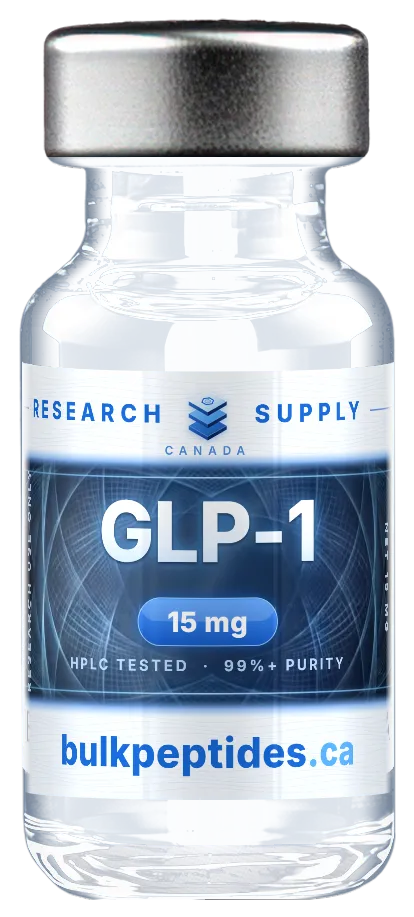
Peptide Assay Reproducibility: Why Results Drift Between Runs
An assay that worked beautifully in March and gives a different answer in June is one of the most frustrating problems in a research lab. Peptide assay reproducibility depends on far more than the biology under study. The material in the vial, how it was stored and dissolved, the cells, the reagents and the analysis all have to stay consistent for a result to repeat. This article breaks down where run-to-run and lab-to-lab drift usually comes from, and what a lab, particularly one buying and using research material in volume, can put in place to keep results stable over a long project.
Repeatability, reproducibility and replicability
These terms are used loosely, but separating them helps diagnose problems. Repeatability is agreement between results from the same operator, equipment and lab over a short period. Reproducibility usually refers to agreement across different days, operators, instruments or sites. Replicability often means an independent group reaching the same conclusion with new data. An assay can be highly repeatable within a day and still reproduce poorly across months, which points to inputs that change slowly over time.
Start with what is in the vial
Peptides are not interchangeable commodities from one vial to the next unless they come from the same lot and have been handled the same way. Several material-related factors affect results:
- Purity and impurity profile: two lots with similar headline purity by HPLC can carry different minor impurities, such as deletion sequences or truncated fragments, and some of those may be active in an assay.
- Net peptide content: a lyophilised powder contains counter-ions and water. If net content differs between lots and concentrations are calculated from powder weight, the effective concentration shifts.
- Counter-ion: trifluoroacetate, acetate and hydrochloride salts behave differently, and residual trifluoroacetate can affect some cell-based readouts.
- Storage history: exposure to warmth, moisture or light can oxidise sensitive residues such as methionine and cysteine, or promote deamidation of asparagine.
- Solution handling: repeated freeze-thaw cycles, adsorption to plastic and aggregation all reduce the amount of intact peptide reaching the cells.
Improving peptide assay reproducibility at receipt
For labs ordering many vials at once, the receiving bench is where reproducibility is won or lost. A simple routine:
- Record every vial in the inventory log with its lot number and the cap and crimp colour that ties it to its certificate.
- File the certificate for the lot where one is published, or request what the supplier has on file.
- Note the condition of the packaging and the lyophilised cake on arrival.
- Move vials to cold, dry, dark storage the same day, and log the location and temperature.
- Assign vials to projects in advance so that a whole study draws from one lot.
Because orders ship from within Canada, there is no customs hold between dispatch and your cold room, which removes one variable from a lab’s QC records.
Stock solutions and aliquots
Once a vial is opened, most variability comes from how the stock is prepared and stored. Dissolve in a solvent suited to the sequence, make a stock at a sensible concentration, and aliquot into single-use volumes so no aliquot is thawed more than once. Low-binding tubes reduce losses of hydrophobic sequences. Label each aliquot with the compound, lot, concentration and preparation date, and record the same details in the log. When a result looks off, the first question should be answerable in seconds: which lot, which vial, which aliquot, prepared when?
Biological and reagent drift
The biological system changes too. Common culprits:
| Source | How it drifts | Mitigation |
|---|---|---|
| Cell line | Phenotype and receptor expression shift with passage; misidentification or contamination | Passage limits, banked stocks, authentication, mycoplasma testing |
| Serum and media | Lot-to-lot differences in growth factors and binding proteins | Test and reserve serum lots; record lot numbers |
| Antibodies and kits | Affinity and background vary between lots | Bridge new lots against old with shared controls |
| Instruments | Detector sensitivity and temperature control change over time | Regular calibration and reference plates |
| Operators | Differences in timing, pipetting and technique | Written protocols and training on shared samples |
Controls that reveal drift early
Running the same reference samples on every plate turns reproducibility from a hope into a measurement. A reference compound with a known potency, a positive control at a fixed concentration, and vehicle controls let you track assay behaviour over time. Plotting these on a control chart shows a slow shift long before it undermines a comparison. Setting acceptance limits in advance tells you when a run should be repeated rather than analysed.
Analysis choices that affect agreement
Different analysis decisions applied to the same raw data can produce different conclusions. Fix the curve-fitting model, normalisation method, outlier rules and statistical tests in the protocol, and apply them the same way to every run. Keep raw data files alongside the processed results so that any reanalysis starts from the same point.
Documentation that lets someone else repeat the work
A result is only reproducible by another person if they know exactly what was done. A methods record should include the peptide name, sequence, lot, supplier, counter-ion if known, stock solvent and storage, cell line source and passage range, reagent lots, instrument settings and the analysis pipeline. Labs working from large orders have an advantage here, because a single lot supplying a whole programme means one set of analytical data covers every experiment.
Bulk Peptides products are third-party tested for purity by HPLC, and certificates are published for some products. Mix-and-match volume pricing counts every vial in the cart toward the volume break, which makes it practical to order enough of one lot, plus reference compounds, to cover a study from start to finish.
Bulk Peptides sells research peptides for in-vitro laboratory use only. They are not for use in humans or animals, and this article concerns laboratory quality practice.