Third-Party vs In-House Peptide Testing: What Independence Adds
Every research peptide has been tested by somebody. The question a buyer should ask is who did the testing, what they were checking, and whether they had any reason to hope for a particular answer. Labs searching for third party tested peptides in Canada are usually trying to answer exactly that. This article compares in-house and independent testing, explains what each can and cannot tell you, and gives procurement and QC teams a practical way to read the reports that come with a volume order.
Two kinds of testing, two different jobs
In-house testing is done by the manufacturer or supplier in its own laboratory. It is essential to production: a synthesis facility checks crude and purified material at several steps to decide whether a batch is ready to move on. Done well, in-house QC is fast, frequent and closely tied to the process.
Third-party testing is done by an outside laboratory with no commercial stake in the result. The supplier sends a sample, the lab runs the agreed methods, and the lab issues the report under its own name. Its value is not that the instruments are better, but that the people running them are independent of the sale.
These are complementary, not competing. A good supplier relies on in-house data to make the product and on independent data to show a customer that the finished material matches its description.
Why independence matters to a buyer
An in-house result can be entirely accurate and still be hard for an outsider to trust. The same organisation chose the method, set the integration parameters, decided which sample to run and wrote the certificate. None of that implies bad faith, but it means a buyer has no independent check on any of those choices.
Independent testing removes several of those decisions from the seller’s hands. It does not remove all of them. The most important one that remains is sample selection: if the supplier chooses which vial to send, the report describes that vial. That is why the link between the tested sample and the material you receive, through lot numbers and vial identification, matters as much as the result itself.
What third party tested peptides in Canada are usually tested for
“Tested” can mean very different things. Before comparing suppliers, it helps to know what the common assays cover:
| Test | Question it answers | What it does not tell you |
|---|---|---|
| HPLC purity | What share of the UV-absorbing material is the main peptide | Identity, water, salt or non-UV contaminants |
| Mass spectrometry | Is the main component the right molecule | How much of it there is |
| Net peptide content | How much of the vial’s weight is peptide rather than salt and water | Purity of that peptide |
| Water content (Karl Fischer) | How much moisture the solid holds | Anything about the peptide itself |
| Endotoxin, sterility, residual solvents | Specific contaminant classes | Only covered if the report lists them |
For most research peptides, the core of a third-party report is HPLC purity with the chromatogram, often alongside a mass spectrum. Anything beyond that is only covered if the report explicitly names the assay.
How to read an independent report
A procurement or QC reviewer can assess most reports in a few minutes by checking the same things every time:
- Issuer. The report should carry the testing laboratory’s name, not only the supplier’s branding.
- Sample link. Look for a sample description, lot or batch reference, or vial identifier you can connect to the material you received.
- Date. A result from a long time ago may not reflect a lot manufactured since.
- Method. Column type, gradient and detection wavelength should be stated, even briefly. For most peptides a reading near 214 nm, where peptide bonds absorb, gives a fuller picture than 280 nm, which only sees aromatic residues.
- Raw data. A chromatogram with integrated peaks is far more informative than a single percentage. Check that small peaks near the main one have been integrated rather than ignored.
- Identity. If a mass is reported, compare it with the calculated molecular weight for the sequence.
A report that passes these checks is useful evidence. One that fails several of them is closer to marketing.
Where in-house testing still earns its place
Independent results are a snapshot. In-house testing is what shows consistency over time, and for labs buying in volume that consistency is often the bigger concern. Reasonable questions to ask a supplier include whether it trends purity across lots, how it handles a lot that falls below specification, and whether it retains samples from each lot for later comparison.
Your own lab is the third participant. For large or long-running orders, some teams send one vial per lot to a lab of their choice when the shipment arrives. That result is independent of both supplier and manufacturer, and it gives you a baseline to compare against if a later experiment behaves unexpectedly.
A testing plan for volume orders
If your lab buys the same compounds repeatedly, a light written plan keeps testing proportionate:
- Request the supplier’s available certificate for each lot before or at delivery.
- Test one vial per new lot yourself, or through a lab you choose, for identity and purity.
- Record the lot, certificate reference and your own result together in the inventory log.
- Retest only when a lot has been held for a long time or when results drift.
Buying a larger quantity from a single lot reduces the number of lots to verify, which makes the plan cheaper as well as simpler.
How Bulk Peptides handles testing
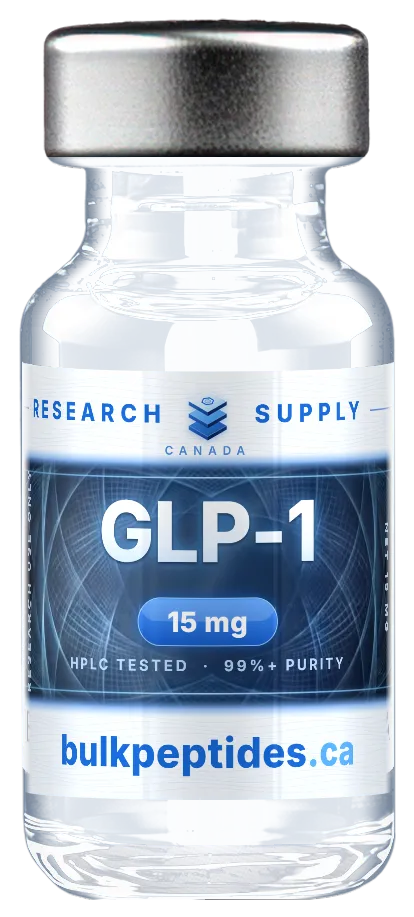
Our products are third-party tested for purity by HPLC. Certificates are published for some products, either on the product page or on our certificates of analysis page, and each vial is tied to its report through its cap and crimp colour, which you compare with the photographs on the certificate when the order arrives. If an independent result disagrees with a certificate, our purity guarantee page explains what we do about it. If the certificate for your lot is not posted, contact us and we will share what we have on file. Mix-and-match volume pricing counts every vial in the cart toward the volume break, and orders ship from within Canada.
All Bulk Peptides products are sold for in-vitro laboratory research only. They are not for human or animal use, and nothing in this article is guidance on any such use.