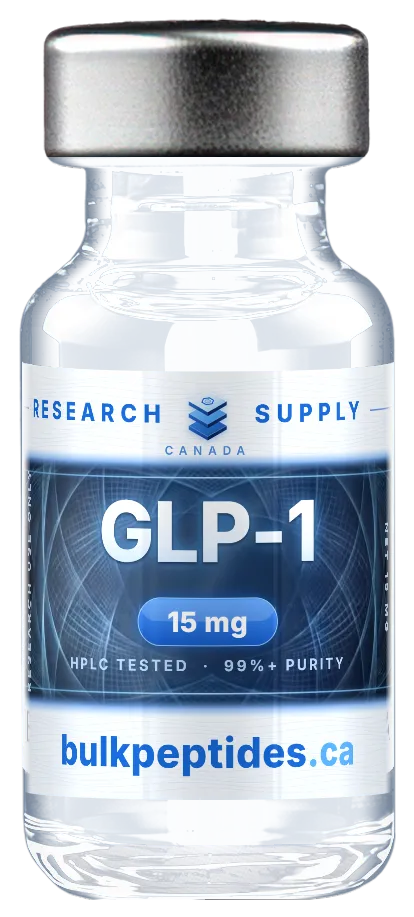
Receiving a Peptide Shipment: A Checklist for Canadian Labs
A courier dropping a carton at your loading dock is the last moment a problem can be blamed on transit rather than on your own storage. For peptides shipped within Canada, the trip is usually short, but a multi-vial order still deserves a structured receiving check before anything goes into cold storage. This checklist is for the lab managers, receivers and QC staff who log research material in volume: what to look at, in what order, and what to write down so that every vial can be traced later.
Receiving is a QC step, not a mailroom task
Once vials from a new order are mixed into shelf stock, nobody can say which box they came in, what state they arrived in or which certificate they belong to. A discrepancy found at the door takes one email to resolve. The same discrepancy found three months later, halfway through a study, turns into a debate about whether the fault lies with the supplier, the courier or your freezer.
The fix is organisational rather than technical. Give receiving to one trained person (with a named backup), process shipments on the day they arrive, and use the same written form every time. Consistency matters more than thoroughness here: a short check done identically on every order produces records you can compare across lots and years.
Before the carton is opened
Start with the outside of the package. Several useful facts can only be captured before the tape is cut:
- Paperwork match: consignee name, order number and the number of parcels against your purchase order.
- Outer condition: crushed corners, punctures, water staining, or tape that looks re-applied.
- Timing: the courier’s delivery scan, the time the box actually reached the lab, and how long it sat at reception in between.
- Environment: whether the parcel spent time somewhere unusually hot or cold, such as a sunny dock in July or an unheated vestibule in January.
If anything looks wrong, photograph it from two angles before opening. Pictures of the unopened box are the evidence a supplier or carrier will ask for first.
One winter-specific point: a carton that arrives very cold should stay closed, or at least the vials should stay sealed, until they reach room temperature. Opening a cold vial in warm, humid air lets moisture condense on the freeze-dried solid, and moisture does more harm to a lyophilised peptide than the cold ever did.
Checking peptides shipped within Canada, vial by vial
With the box open and the contents on a clean bench, work through each compound in turn. A fixed sequence keeps a large order from turning into a pile of half-checked vials:
- Count. Tally vials against the packing slip, grouped by compound and then by batch.
- Read the label. Compound name and nominal amount per vial should be legible and should agree with the slip. If the supplier prints a lot or batch number, check that as well.
- Inspect the closure. The crimp should be tight and even, the stopper seated, and the glass free of cracks or chips around the neck.
- Look at the solid. Freeze-dried peptide normally appears as a white to off-white cake or powder.
- Match the certificate. Some suppliers print batch numbers on vials; others tie each vial to its certificate by cap and crimp colour, shown in the certificate’s photographs. Either way, confirm the vial corresponds to the certificate you are filing.
- Record. Enter everything in the receiving log before the vials leave the bench.
Appearance varies more than people expect, and not every variation is a defect. The table below separates the cosmetic from the concerning.
| What you see | Likely explanation | Suggested action |
|---|---|---|
| Cake has shrunk from the walls or broken into loose powder | Normal freeze-drying variation, or movement in transit | Note it and accept |
| Powder dusted on the stopper or upper glass | Vial was shaken or inverted on the way | Note it, tap the solid down gently, accept |
| Yellow or brown tint, sticky or glassy appearance, visible droplets | Moisture ingress or chemical change | Quarantine and contact the supplier |
| Cracked glass, loose or missing crimp | Closure failure | Quarantine, photograph, do not place in stock |
| Vial does not match the certificate you hold (colour coding or batch number) | Paperwork or picking error | Hold the vials until the supplier confirms which batch shipped |
What arrival temperature actually tells you
Receivers sometimes worry that a box which is not ice cold on arrival has been compromised. For dry, freeze-dried peptides that is rarely the right conclusion. Most lyophilised research peptides tolerate a few days at room temperature without measurable change, which is exactly why ordinary domestic shipping is workable. Long-term storage and anything already in solution are where temperature control really counts.
The cases worth writing up are the extremes: a parcel that spent a long weekend in a hot delivery van, or one delayed for many days in transit. Cold on its own is not the concern for a sealed dry solid; the condensation risk described above is. Shipping inside the country helps on both fronts, because there is no customs examination to add unpredictable days, and a domestic courier’s tracking history is usually complete enough to show where the time went.
Logging a multi-vial shipment
The receiving log is what turns a box of vials into traceable inventory. Whether you use a spreadsheet, a paper binder or a LIMS, capture the same fields for every line:
- Date and time received, and the receiver’s initials
- Supplier order number and your internal purchase order
- Compound, nominal amount per vial and number of vials
- Batch identifier: a printed lot number where there is one, otherwise the cap and crimp colour
- Certificate reference, where one applies, and where the file copy is kept
- Condition notes, including anything from the table above
- Storage location: fridge or freezer, shelf and box position
For larger orders that span several batches of the same compound, keep the batches physically separate in storage and give each group its own internal identifier. When a result looks odd months later, that identifier lets you go straight to the matching certificate and receiving notes without re-testing the whole shelf.
The first 24 hours in storage
Vials that passed inspection should go into cold, dark, dry storage the same day. A few habits protect the material from here on:
- Keep vials sealed until the day they are needed. Opening a vial “just to check” invites moisture every time.
- Put stock in a refrigerator at 2–8 °C as soon as it is logged, or in a freezer for material that will be held a long time, inside a closed box that buffers temperature swings when the door opens.
- Arrange stock so the oldest batch is used first, and label the box front with its batch details so nobody has to dig.
- Log the date each batch went into cold storage; it becomes the reference point for your own retest or review schedule.
Longer-term conditions for freeze-dried material are covered in our guide to storage and stability of lyophilised peptides.
If something is wrong
Quarantine the affected vials in a labelled bag, keep them in cold storage, and do not discard anything. Then contact the supplier the same day with the order number, batch details, a description of the problem and your photos. A supplier can only investigate what you can document, and material you have thrown away cannot be re-examined.
At Bulk Peptides, products are third-party tested for purity by HPLC, certificates are published for some products on our certificates of analysis page, and vials are matched to their certificate by cap and crimp colour. Orders ship from within Canada, so there is no border crossing between our shelf and your receiving bench. If a shipment arrives with a problem, contact us with your order details and photographs and we will work through it with you.
All products referred to here are supplied by Bulk Peptides for in-vitro laboratory research only. They are not for human or animal use, and nothing in this article is guidance on their use.