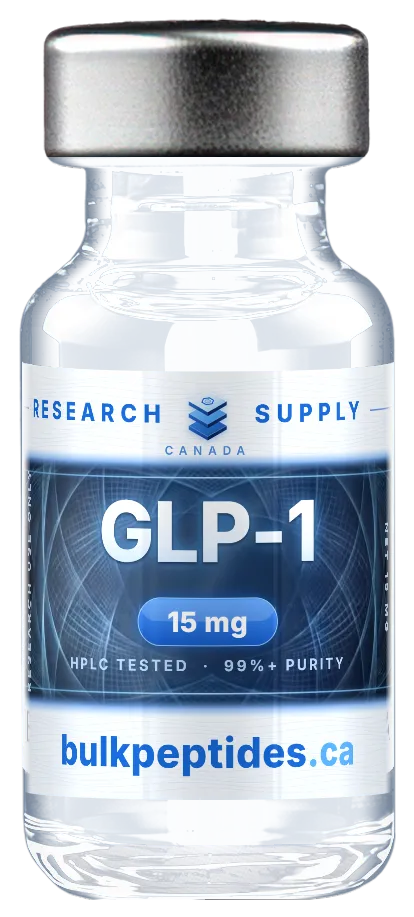
Peptide Storage for Bulk Stock: Keeping Lyophilised Vials Stable
A single vial can sit at the back of a fridge and be used within the week. A shipment of forty vials that will feed a project for six months is a different storage problem. Good peptide storage is what keeps the last vial of a lot as close as possible to the certificate that came with the first. The difficulty is that degraded peptide usually looks exactly like intact peptide, so the protection has to come from routine rather than inspection. This guide is written for the people who receive, shelve and hand out research peptides in volume.
Why dry powder buys you time
Research peptides are shipped lyophilised, or freeze-dried, for a simple reason: most of the chemistry that damages a peptide needs water. Three reactions matter most:
- Hydrolysis of peptide bonds, which cuts the chain.
- Deamidation of asparagine and, more slowly, glutamine, which adds about one dalton and changes charge.
- Oxidation of methionine, cysteine and tryptophan side chains.
In a dry cake all three run far more slowly than in solution. Properly kept lyophilised material can stay stable for a long time, whereas the same sequence dissolved and left at room temperature may show measurable breakdown within days. Every storage rule below is really about keeping water, heat, light and oxygen away from that cake.
Peptide storage temperatures for a bulk shipment
Temperature sets the pace of every degradation route, and higher temperatures speed them up sharply. Dry powder generally tolerates a short spell at ambient temperature in transit, but that tolerance is for days, not weeks on an open shelf. A workable scheme for a multi-vial order:
| Stage | Typical condition | Notes |
|---|---|---|
| Arrival | Into cold storage the same day | Record arrival date and the state of the packaging |
| Vials in current use | Refrigerated, 2 to 8 °C | Keep sealed until needed |
| Reserve vials for later months | Frozen, commonly around -20 °C | Avoid freezers with automatic defrost cycles |
| Reconstituted solutions | Refrigerated for short periods, or frozen in single-use aliquots | Stability depends on sequence and buffer |
Auto-defrost freezers warm up periodically to clear frost, which quietly cycles the contents; our note on freezer choice explains why that matters. Cross-country transit in a Canadian winter or summer can also expose parcels to real extremes, so check packaging on arrival and log anything unusual. See temperature excursions in shipping for how to judge them.
Condensation: the risk every time a vial is opened
Lyophilised peptide attracts water. When a cold vial is opened straight away, the air touching the glass and powder cools below its dew point and moisture condenses directly onto the cake. Resealing traps it inside, and the hydrolysis the freeze-drying was meant to prevent can start.
The fix is a habit rather than equipment:
- Take the sealed vial out and let it reach room temperature before opening; larger vials need longer, but somewhere around 20 to 30 minutes is usual.
- Open it in the driest space available and work quickly.
- Reseal promptly, and return it to cold storage without delay.
- For any vial that must be opened more than once, store it with desiccant.
Light, oxygen and choosing a storage container
Residues with aromatic side chains, such as tryptophan, tyrosine and phenylalanine, can be damaged by light, and methionine and cysteine oxidise readily in air. Two examples from our range show the point: Semax contains methionine, and Melanotan II contains tryptophan.
For a lab holding many vials, the choice of peptide storage container matters as much as the fridge setting:
- Use amber vials or an opaque secondary box so stock is not exposed every time the door opens.
- Choose a lidded container that can hold a desiccant pack alongside the vials.
- Group vials by compound and lot so a technician can find one without handling the rest.
- For especially oxidation-prone sequences, flushing the headspace with an inert gas such as nitrogen or argon before resealing is standard practice.
More on these pathways is in our article on light, oxygen and temperature.
Splitting a large lot without degrading it
Every trip from cold storage to the bench and back passes the vial through the dew point again. With a large order the answer is to disturb the bulk stock as rarely as possible:
- Aliquot on first opening. Divide material into single-use portions the first time a vial is opened, so the main stock is handled once rather than repeatedly.
- Use oldest first. Rotate stock so vials that arrived earlier are used before newer ones, and keep reserve vials sealed and frozen until needed.
- Label and log. Record compound, lot, date opened and the number of times any working aliquot has been accessed.
- Keep lots separate. If two lots of the same compound are on the shelf, store and label them apart so results can be traced back to the right certificate.
Once the peptide is in solution
Dissolving a peptide removes most of the protection the dry state gave it, and stability then depends on the sequence and the buffer. Solutions should be kept cold, held only briefly, and made fresh when the experiment allows. pH matters: many peptides degrade faster at either extreme, and sequences containing aspartate are prone to isomerisation in acidic conditions. If a solution has to be kept, freeze it in single-use aliquots rather than drawing repeatedly from one tube. Our note on freeze-thaw cycles covers the trade-offs.
Spotting and confirming degradation
Looking at a vial catches only the worst problems. A cake that has shrunk, collapsed, turned sticky or changed colour suggests moisture got in; our guide to cake appearance shows what normal looks like. Cloudiness or particles after dissolving point to aggregation. Neither is an early warning, though. The reliable test is to run analytical HPLC on stored material and compare the trace with the original chromatogram for that lot, which is one more reason to keep certificates filed with the inventory record.
Bulk Peptides products are third-party tested for HPLC purity, certificates are published for some products, and vials are matched to their certificate by cap and crimp colour, which makes that comparison easier to set up.
All material discussed is sold for in-vitro laboratory research only. It is not for human or veterinary use, and the handling advice here applies to analytical and laboratory samples.