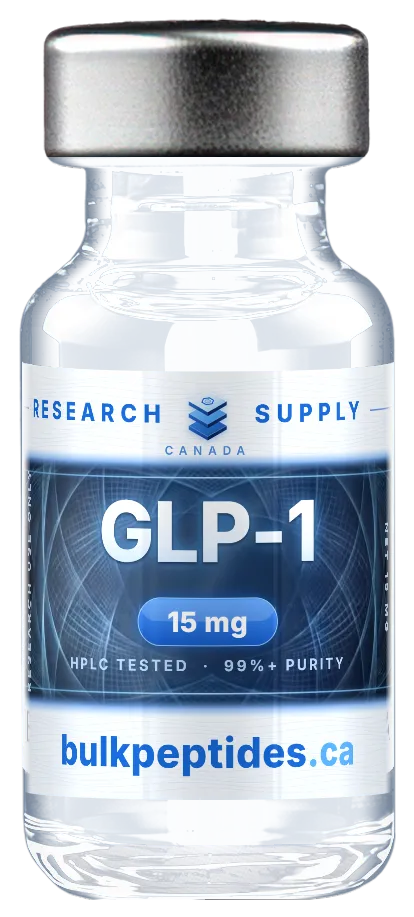
How to Vet a Research Peptide Supplier in Canada for Bulk Orders
A purchase order for fifty vials is a different commitment from a single trial vial, and the supplier you pick has to hold up for the whole run of work. Choosing a research peptide supplier in Canada comes down to evidence you can inspect yourself: the paperwork behind a lot, the way identity and purity were measured, how the material travels, and whether the same lot will still be there when you reorder. This checklist is written for lab managers, procurement leads and QC staff who need to sign off on a vendor, not just a product page.
Start with the paperwork, not the price list
Marketing copy is cheap to write and impossible to audit. Analytical documents are the opposite, so they are the right place to begin. Before comparing prices, ask a prospective vendor for the analysis that covers the lot you would actually be shipped, and judge the answer on three things.
- Lot linkage. The document should be traceable to physical vials, whether through a printed lot code, photographs of that production run, or a colour-coded cap and crimp that matches the certificate. A report that could belong to any batch tells you nothing about yours.
- A date. An undated analysis cannot be placed against the material in your hands.
- The raw trace. A percentage on its own is a claim. The chromatogram behind it is evidence.
How quickly and completely a vendor answers this first request is itself a useful data point. Real data is easy to send; a vague reply usually means there is not much behind it.
Reading the purity evidence a supplier sends
Once a certificate is in hand, a QC reviewer can pull a surprising amount out of a single page.
Look at the chromatogram shape
Two samples reported at the same purity can look quite different. In one, the missing few percent might be a single large impurity sitting close to the main peak; in the other, a spread of tiny peaks near baseline. A main peak with a shoulder or a tail can hide a closely related species. None of that is visible from a number alone.
Check the detection wavelength
Peptide purity is normally measured by UV absorbance in the region of 214 to 220 nm, where the peptide bond absorbs. A figure taken at 280 nm only sees residues with aromatic side chains, so impurities lacking tryptophan or tyrosine can be undercounted. Results measured at different wavelengths are not interchangeable, and a certificate that states its wavelength is one you can actually compare.
Confirm identity was tested separately
HPLC answers “how homogeneous is this sample?” It does not answer “what is it?” That question belongs to mass spectrometry. A useful report places the calculated mass next to the observed mass, so the reader can see they agree. Purity without identity only proves that you have a very clean unknown.
Net peptide content and the true cost per milligram
For volume buyers this is where comparisons most often go wrong. The labelled fill of a vial is the weight of the lyophilised solid, and that solid contains counter-ions left over from purification and some bound water as well as the peptide itself. The actual peptide fraction is known as net peptide content, and it is commonly well below the nominal fill. Our explainer on net peptide content covers how it is measured.
Two practical consequences follow for a procurement team:
- When net content is stated, divide the vial price by the milligrams of peptide, not the milligrams on the label, and compare vendors on that basis.
- When it is not stated, record the comparison as incomplete rather than assuming the cheaper quote wins. A low price per vial can hide a lower peptide fraction.
The same number matters at the bench. Concentrations calculated from gross vial weight carry an error that nobody has quantified, and that error travels into every assay built on those stock solutions.
What a research peptide supplier in Canada should offer a volume buyer
Beyond analytical quality, a larger order raises questions about continuity and logistics that a one-off purchase never does. The table below summarises what to ask and why it matters.
| Question to ask | Why it matters for bulk work |
|---|---|
| Can the whole order come from one lot? | Keeps lot-to-lot variation out of a study that runs across many vials. |
| Is there enough of the current lot to cover a reorder? | A project that spans months should not switch material halfway through without anyone noticing. |
| Does material ship from inside Canada? | Domestic parcels avoid customs inspection, possible detention at the border and import charges. |
| How is packaging handled in hot or cold months? | Cross-country transit can mean long exposure to summer heat or deep winter cold. |
| How are vials matched to their documents? | Receiving staff need a fast way to tie each group of vials to its certificate in the inventory log. |
Ask these before the first order, not after. A vendor that can answer them clearly is one you can plan a long series of experiments around.
Warning signs in product listings
Often the strongest signals are what a compliant listing leaves out. A supplier working inside the research-use framework does not publish charts of how much to take, instructions for giving anything to a person, customer testimonials about how someone felt, or before-and-after language. When product copy is built around effects in people, the fine-print disclaimer at the bottom does not change what the vendor is doing, and that exposure can turn into an interruption in your supply if regulators act. Our plain-language note on how research peptides are regulated in Canada explains the framework.
Analytical claims deserve the same scrutiny. A headline purity figure with no trace, no method, no wavelength and no lot reference is advertising. Honest handling advice is another good sign: a vendor that tells you lyophilised material belongs in cold storage, that vials should warm to room temperature before the seal is broken, and that solutions do not keep for long is describing how peptides really behave. See our note on storage and stability.
A short vetting routine for your team
Vendor qualification does not need to be a long project. One product, examined properly, usually tells you how the rest of the catalogue is run.
- Choose one compound you actually intend to buy and request the analysis for the lot currently shipping.
- Confirm that document can be tied to specific vials.
- Check for observed and calculated mass side by side, and for a stated detection wavelength beside the purity result.
- Look for net peptide content, and ask for it if it is missing.
- Read one full product description and note any wording about effects in a person.
- Ask whether your intended quantity can be supplied from a single lot.
File the answers with your vendor records. When a later lot arrives, the same routine gives you a consistent baseline to compare it against.
Limits of supplier checks
Everything above helps establish that material matches its identity and purity claims. It does nothing more than that. Research-grade peptides are not made to pharmaceutical manufacturing standards, carry no sterility or endotoxin assurance unless those tests are specifically reported, and no document from any vendor makes them suitable for use in people or animals.
At Bulk Peptides, products are third-party tested for purity by HPLC, certificates are published for some products on our certificates of analysis page, and vials are matched to their certificate by cap and crimp colour. Orders ship from within Canada, and volume pricing is mix-and-match, so every vial in the cart counts toward the break. You can browse the full catalogue or read our overview of research peptides in Canada.
All material described here is sold for in-vitro laboratory research only. It is not for human or veterinary use, and nothing in this article is guidance on using it in either.