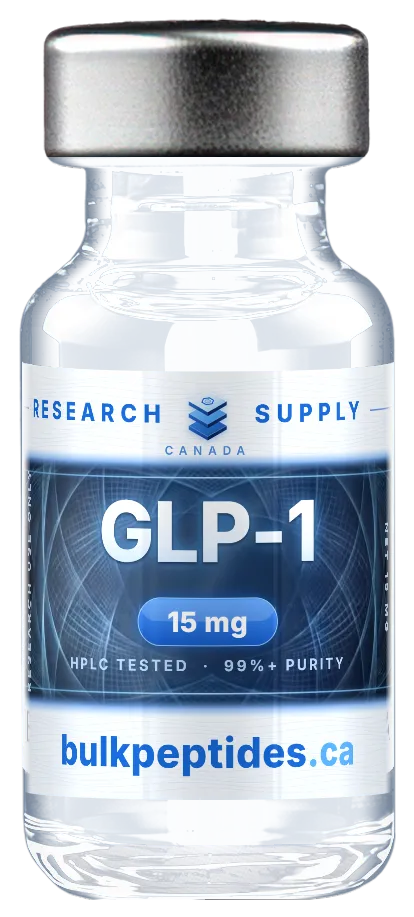
Peptide Inventory Management: Labels and Records for Research Labs
A freezer full of research peptides is only as useful as the records that describe it. Without clear labels and a reliable log, a lab cannot say which lot a result came from, how long a vial has been in storage, or whether an aliquot has been thawed three times already. Good peptide inventory management is not complicated, but it has to be consistent, and it matters more the larger your stock becomes. This guide sets out a labelling and record-keeping system that scales from a few dozen vials to several hundred.
What your records need to answer
Before choosing label formats or software, decide what questions the system must answer quickly. For most research labs the list looks like this:
- Which lot did this vial come from, and where is its certificate, if one applies?
- When did it arrive, and what condition was it in?
- Where exactly is it stored?
- Has it been opened, and if so, what was made from it and when?
- How many vials of each compound and lot are left?
- Which experiments used material from this lot?
If your current system cannot answer each of these in under a minute, the gap is usually in the link between the physical label and the written record rather than in either one alone.
Labelling stock vials
Supplier labels carry the compound name and amount, and sometimes a lot number, but they are not designed for your workflow. Adding a small internal label on receipt ties each vial to your own records. Keep it short: an internal ID, the receipt date and the initials of the person who logged it are enough, because everything else lives in the log.
A simple internal ID format works well, for example compound code, receipt year and a sequence number. What matters is that the same ID appears on the vial, the storage box map and the inventory log, and that it is never reused.
Label materials that survive the freezer
Ordinary office labels curl, fall off or smear at −20 °C and below. Practical choices for peptide vials include:
- Cryogenic or freezer-rated labels with adhesive designed for cold, curved glass
- Printed labels rather than handwriting where possible; thermal-transfer printing holds up better than inkjet
- Solvent-resistant markers if you do write by hand, since standard ink can wipe off with alcohol or condensation
Apply labels to vials at room temperature and before they go into cold storage. Adhesives bond poorly to cold, damp glass.
Labelling aliquots and solutions
Once a vial is opened and material is divided into aliquots or prepared as an analytical solution, the labelling problem gets harder: tubes are small, and there are many of them. The workable approach is a minimal label plus a detailed record.
On the tube itself, include the parent vial’s internal ID, an aliquot number, the preparation date and, for solutions, the concentration. In the log, record the solvent or buffer, the volume, who prepared it, where it is stored and how many freeze-thaw cycles it has been through. When an aliquot is used up or discarded, close its entry rather than deleting it.
Record how each concentration was worked out, not just the figure. A value calculated from gross vial weight and one corrected for net peptide content can differ noticeably, because counter-ions and residual water add weight without adding peptide. Months later, nobody can tell which method was used unless the log says so.
Building the peptide inventory management log
Whether you use a spreadsheet, a LIMS or a bound notebook, the structure is the same. One row per vial (or per group of identical vials from the same lot) and a consistent set of fields:
| Field | Example of what to record |
|---|---|
| Internal ID | The code on your own label |
| Compound and nominal amount | As on the supplier label |
| Supplier batch | Lot number exactly as printed, if the vial carries one |
| Cap and crimp colour | Used to match the vial to its certificate where the supplier colour-codes batches |
| Certificate reference | File name or location of the certificate, if one applies |
| Order and receipt date | Supplier order number, date received |
| Arrival condition | Notes from the receiving check |
| Storage location | Fridge or freezer, shelf, box and position |
| Status | Sealed, opened, aliquoted, consumed, discarded |
| Linked experiments | Notebook or project references |
Keep the certificate files in one shared folder, named by compound and batch, so the reference in the log always points somewhere real.
Keeping lots separate in a bulk inventory
Labs that buy in volume often hold several lots of the same compound at once, especially when orders overlap. Mixing them on the shelf is the most common way traceability gets lost. A few habits prevent it:
- Store each lot in its own labelled box or rack section, with the batch details on the outside.
- Use the oldest lot first, and note the switch to a new lot in the log and in your experimental records.
- When a single study must use one lot throughout, reserve enough vials at the start and mark them as allocated.
- Order enough from a single lot to cover a project where possible, which reduces the number of lots in play.
Audits, reconciliation and disposal
Records drift over time as vials are moved, used or misplaced. A short count on a regular schedule, monthly for busy labs or quarterly for quieter ones, compares the log with what is physically in each box and resolves differences while memories are fresh.
Keep a temperature record for every fridge and freezer that holds stock, and log any excursion, such as a door left ajar, a power cut or a failed compressor, with the date and roughly how long it lasted. Those entries are often the only way to explain a drifting result long after the event.
Set a lab policy for how long opened material and prepared solutions may be kept before review, and record it in your standard procedures rather than on individual labels. When material is discarded, record the date, the reason and who did it. A complete history, including disposal, is what lets you answer questions about a lot long after the last vial has gone.
Supplier details that make record keeping easier
Your system is easier to run when the supplier’s labelling is consistent. At Bulk Peptides, products are third-party tested for purity by HPLC, certificates are published for some products, and vials are matched to their certificate by cap and crimp colour rather than a printed batch number. Recording that colour pairing in your log, alongside a saved copy of the certificate from our certificates of analysis page, is what ties each vial to its paperwork. Orders ship from within Canada, and mix-and-match pricing counts every vial in the cart toward the volume break.
Bulk Peptides supplies research compounds for in-vitro laboratory use only. They are not for human or animal use, and nothing in this article is guidance on any such use.