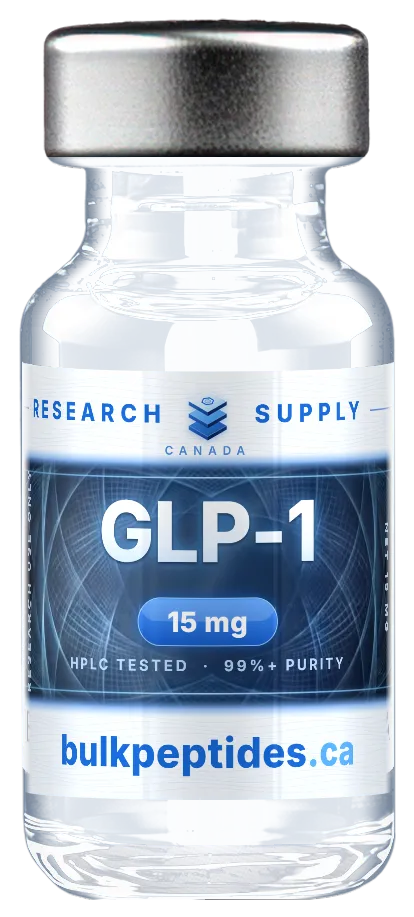
Dry Ice Shipping for Peptides: Cold Packs, Classes and Labels
Receiving teams often assume that a box packed with dry ice must contain something hazardous, and that a box without it has been packed carelessly. Neither is necessarily true. For peptides shipped within Canada, two separate questions decide how a parcel is packed and labelled: how the peptide itself is classified for transport, and what, if anything, is used to keep it cold. This article untangles the two, explains why lyophilised research peptides rarely need dry ice, and sets out what a lab receiving large multi-vial orders should check at the door.
Two classifications in one box
Transport rules look at each component of a shipment. The contents are classified on their own properties, and the refrigerant is classified on its own properties. A parcel can therefore be non-regulated for its contents yet carry dangerous goods markings because of the coolant, or the reverse.
- The product: under the Transportation of Dangerous Goods rules it is regulated only if it meets the criteria of one of the nine dangerous goods classes, which run from explosives and gases through flammable, oxidising, toxic, radioactive and corrosive materials to a ninth miscellaneous class.
- The refrigerant: gel packs and water ice are generally not regulated. Solid carbon dioxide, better known as dry ice, is.
How research peptides are usually classified
Most lyophilised research peptides, in the milligram quantities sold per vial, do not meet the criteria for any dangerous goods class. They are typically not flammable, not corrosive, not toxic at the thresholds used for transport classification, and not reactive. Where a safety data sheet exists, its transport section will normally show the product as not regulated for transport, and it can move as an ordinary parcel.
That outcome reflects the absence of data showing a hazard, rather than proof that none exists. With nothing establishing toxicity at the transport thresholds, there is no basis to place a dry peptide in a toxicity class.
That is a general pattern, not a guarantee for every product. Some materials sold alongside peptides, and some solvents a lab might order separately, can fall into regulated classes. Each product’s own properties decide, not the fact that it is a peptide.
Solutions are a different shipment
Dissolve the same peptide in a meaningful volume of a flammable solvent such as acetonitrile or an alcohol and the flammable liquids class comes into play. The shipment can then be regulated because of the solvent alone, whatever the peptide is. The same logic runs through waste disposal: the solvent, not the peptide, is usually the regulated part.
Dry ice: what makes it regulated
Dry ice is solid carbon dioxide at roughly minus 78.5 °C. As it warms, it sublimes directly into CO2 gas. That gas is the reason for regulation: in a sealed container it builds pressure, and in a closed space such as an aircraft hold or a small room it displaces oxygen. Under international air transport rules, dry ice is assigned UN 1845 and Class 9, miscellaneous dangerous goods.
In practice, an air shipment containing dry ice needs:
- Packaging that lets CO2 gas escape, never an airtight seal.
- Markings that identify the dry ice, including its UN number and the net quantity in kilograms.
- The Class 9 hazard label where the applicable rules call for it.
- A shipper who has declared it to the carrier, which may set its own limits per package.
Air is the strictest case. Domestic road shipments fall under the Canadian rules, while anything that flies also falls under the international air regime and the airline’s own acceptance conditions, which usually mean smaller quantity limits and tighter packaging rules. A parcel that moves freely by road can be restricted by air, so shippers confirm with their carrier before sending.
Why lyophilised peptides rarely need dry ice
Freeze-dried peptides are far more stable than peptides in solution, because removing water slows hydrolysis, deamidation and most other degradation routes. Sealed under dry conditions, most lyophilised peptides tolerate the few days of transit involved in a domestic delivery without meaningful change, provided they are not exposed to sustained high heat. Long-term storage is where cold matters most, and that begins when the vials arrive.
Dry ice makes more sense for peptides already in solution, frozen samples, or biological materials that must remain frozen throughout. For standard lyophilised vials, insulated packaging with non-regulated cold packs in warm months, and good insulation against deep cold in winter, is usually enough.
Peptides shipped within Canada: seasonal realities
| Season | Main risk | What helps |
|---|---|---|
| Summer | Parcels sitting in hot trucks or on doorsteps | Insulated packing, cold packs, prompt pickup |
| Winter | Deep cold in transit and at unheated depots | Insulation; lyophilised powder tolerates cold well, but condensation on opening is the bigger issue |
| Shoulder seasons | Wide swings between day and night | Tracking the parcel and receiving it promptly |
In winter, the most common handling error happens at the lab, not in the truck. Opening a very cold vial in a warm room draws condensation onto the powder. Let sealed vials reach room temperature before opening, or move them straight into cold storage and open them later under controlled conditions.
What the receiving lab should check
For a bulk or multi-vial shipment, a short receiving checklist catches most problems:
- Record the date and time of delivery, and the condition of the outer box.
- If dry ice was used, check that some remains, and open the package in a ventilated area.
- If cold packs were used, note whether they are still cool, without treating a warm pack as proof of damage for lyophilised material.
- Count vials against the packing list, and check each lot number and cap colour against the documentation.
- Inspect each vial for an intact seal and a normal-looking cake or powder.
- Move vials to the specified storage condition and log their location.
- File the packing list, any safety data sheets and test documentation with the inventory entry.
When your lab becomes the shipper
The duty to classify a shipment correctly rests with the consignor, the party that offers it for transport. The carrier does not take it on by accepting a parcel, and the recipient never holds it. A lab becomes the consignor as soon as it sends something out: returning a vial, moving stock between sites, or sending samples to a contract laboratory for testing. At that point classification, marking, documentation and any required training are the lab’s own responsibility, and sample paperwork should travel with the chain-of-custody record.
On the receiving side, a box that arrives without any dangerous goods marks is the sender’s statement that nothing inside is regulated. For dry vials with gel packs that is normally right. If such a parcel turns out to contain dry ice, the missing markings are a discrepancy worth raising with the sender. The Transportation of Dangerous Goods Regulations themselves are the authority on any classification question.
Keeping staff safe with dry ice
When a shipment does arrive with dry ice, handle it with insulated gloves, never touch it bare-handed, and never place leftover dry ice in a sealed container, a walk-in cold room or a small unventilated space. Let it sublime in a well-ventilated area, or follow the institution’s procedure for disposal. Staff who handle incoming dangerous goods may need training under the applicable transport and workplace rules, and institutions usually specify this.
Bulk Peptides supplies peptides for in-vitro and analytical research only. They are not for human or veterinary use.