Research Peptide Regulations in Canada: How the Framework Works
Procurement and compliance staff are often asked a simple-sounding question before a purchase order is approved: what exactly is this material, legally? For research grade peptides in Canada, the answer depends less on the chemistry than on how the product is described and what it is supplied for. This article walks through the federal framework in plain language, from the Food and Drugs Act to the product numbers that authorised health products carry, so that the people signing off on a volume order understand what research-use supply does and does not mean.
This is a general overview written for laboratory buyers. It is not legal advice, and a specific compliance question belongs with a qualified regulatory professional.
Why the description decides the category
The main federal statute for health products in Canada is the Food and Drugs Act, administered by Health Canada. Its idea of a “drug” is wide. In plain terms, it captures substances that are sold or represented for diagnosing, treating, easing or preventing illness or an abnormal bodily condition, or for correcting, restoring or changing how the body functions, whether in people or in animals.
Notice the word represented. The law looks at the claims and context around a product, not only at its structure. One and the same peptide can therefore be a research chemical in one setting and an unauthorised drug in another, with the difference lying entirely in how it is marketed, labelled and sold. That is why wording on a supplier’s product page is not a cosmetic matter.
DIN and NPN: numbers research grade peptides in Canada do not carry
Products that are authorised for sale to the public as health products carry an identifying number on their label:
| Number | What it identifies | What it signals |
|---|---|---|
| DIN (Drug Identification Number) | A drug authorised by Health Canada for sale | The product was reviewed for safety, efficacy and quality before sale |
| NPN (Natural Product Number) | A licensed natural health product | The product was assessed under the natural health products rules |
Research peptides such as BPC-157, TB-500, the melanocortin analogs and the growth hormone secretagogues have neither. They have not been evaluated by Health Canada for use in people, and they are not authorised health products of any kind. A supplier that sells them within the rules does so as laboratory material, and cannot present them as something a person should take.
For a buyer, the absence of a DIN or NPN is not a paperwork gap to be fixed. It is the defining feature of the category, and the reason the material may only be used for laboratory research.
What research-use supply commits both sides to
“For research use only” describes a real position with real limits. On the supplier’s side, it means:
- Products are not labelled, promoted or described in terms of benefits to people or animals.
- There are no instructions for giving the material to a person, and no amounts per person.
- Material is not produced to pharmaceutical good manufacturing practice, so no sterility or endotoxin assurance should be assumed unless those tests are specifically reported.
On the purchaser’s side, it means using the material only for in-vitro and laboratory work, under whatever institutional approvals that work requires, and handling storage and disposal according to institutional and provincial rules. Buying research-grade material gives nobody permission to administer it to a human being, and no supplier has the power to grant that permission.
Advertising rules and the limits of a disclaimer
The Food and Drugs Act also controls how products are presented. It prohibits labelling or advertising a drug in a way that is false or misleading or that is likely to give a wrong impression of its nature, value, composition, merit or safety. It separately restricts advertising products to the general public as treatments or cures for certain serious diseases listed in the Act.
Two practical consequences follow for anyone evaluating a vendor:
- The overall impression counts. Testimonials, before-and-after framing, or copy along the lines of “users report” can all amount to claims by the seller, even when no direct promise is made.
- Fine print does not cancel a claim. A research-use notice at the bottom of a page does not undo benefit-focused wording at the top. If anything, it shows the seller knew the rules.
A listing that stays within the framework describes the compound, its structure and class, what the published laboratory literature measured, and the analytical data for the material. It says nothing about outcomes in people.
Other regimes that are easy to confuse
Controlled Drugs and Substances Act
The Controlled Drugs and Substances Act is a separate statute covering a defined set of scheduled substances, where possession and trafficking carry criminal penalties. The peptides discussed on this site are not on those schedules. That is a narrow statement: being absent from the controlled substances schedules does not stop a compound from falling foul of the Food and Drugs Act as an unauthorised drug when it is sold for human use.
Research involving people
Studies that give an unauthorised drug to human participants require their own authorisation from Health Canada through a clinical trial application, plus research ethics board approval. None of that comes with a purchase of research material, and it is outside the scope of anything a research supplier provides.
Crossing the border
Imported health products can be examined by the Canada Border Services Agency working with Health Canada, and unauthorised drugs may be held or refused entry. Rules in other countries also differ; some countries bring certain peptide classes under anti-doping or controlled-substance laws in ways Canada does not. Material shipped from within Canada to a Canadian lab never enters that border process, which is one reason domestic supply is simpler for institutions to manage.
Paperwork for procurement and compliance teams
Questions about a lot tend to come up months after it arrives, usually during an audit or when a result looks odd. Records made at the time are what make those questions easy to answer. For a multi-vial order, a sensible file includes:
- The lot identity, the arrival date and the condition of the packaging on receipt.
- A saved copy of the analytical report for that lot, kept with the record rather than as a link to a web page that may change.
- Where the vials were stored after receipt and under what conditions, noting any temperature excursion.
- The institutional approvals that apply to the project the material supports.
- How and when unused material was disposed of.
When qualifying a new vendor, a compliance reviewer can also ask:
- Does the product copy avoid any claim about effects in people?
- Is there analytical data that can be linked to the vials you will receive?
- Was that testing carried out by a laboratory independent of the seller?
- Does the material ship from inside Canada?
- Does the vendor offer any guidance on administering its products? If so, treat that as a warning sign rather than a service.
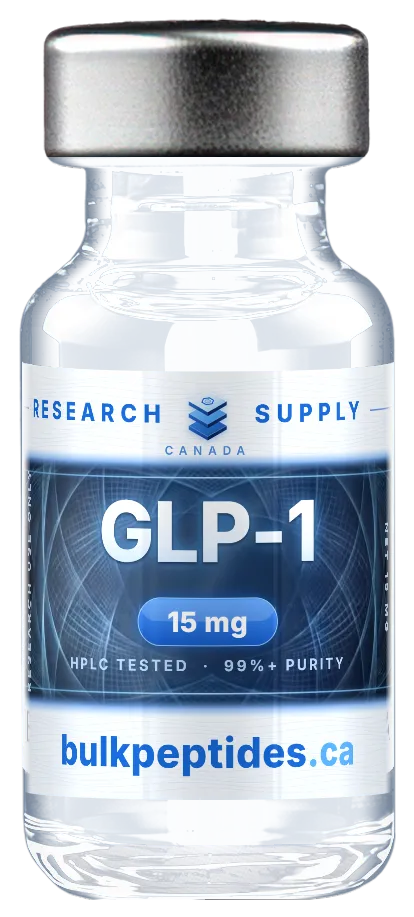
Bulk Peptides supplies Canadian laboratories on research-use-only terms. Our products are third-party tested for HPLC purity, certificates are published for some products, vials are matched to their certificate by cap and crimp colour, and orders ship domestically.
Everything sold by Bulk Peptides is intended solely for in-vitro laboratory research. It is not for human or veterinary use, it carries no DIN or NPN, and this article is general information rather than legal advice.