Peptide Certificate of Analysis: A Section-by-Section Reading Guide
A peptide certificate of analysis is often the only evidence a lab has about what is inside a vial before it goes into an experiment. It is also the page most likely to be filed without being read. For QC and receiving staff handling multi-vial orders, reading it properly takes a few minutes per lot and can save weeks of chasing an odd result. This guide works through a typical certificate from top to bottom, explains what each section proves, and flags the gaps that should make you ask questions.
What the certificate is, and what it is not
A certificate of analysis, or COA, is an analytical report tied to a particular production lot. It lists which tests were run on material from that lot and what they found. Two consequences follow:
- It describes one lot. A report from a batch made long ago says nothing reliable about the lot on your shelf today unless the two are the same.
- It records results, not promises. A product page can say anything; a certificate shows the data, and the data can be checked.
A certificate also has limits. The usual tests establish identity and chromatographic purity. They do not establish sterility, endotoxin levels or residual solvents unless those assays appear on the report by name.
Reading the header: compound, sequence and lot
Start with the block at the top of the page. It should let you confirm, before looking at any data, that the document belongs to the material you received:
| Header field | What to check |
|---|---|
| Compound name | Matches your order exactly, including any variant such as a modified or blended form |
| Sequence and modifications | Terminal groups (amide, acetyl) and any non-standard residues are shown |
| Molecular formula and calculated mass | Consistent with the sequence; this is the value the mass result will be compared against |
| Lot or batch identifier | Present, and traceable to the vials in hand |
| Dates | Manufacture and analysis dates are given |
| Testing laboratory | Named, particularly where the analysis is described as third-party |
Identity: the mass spectrometry section
This section answers whether the molecule is the one on the label. The instrument, usually an electrospray (ESI) or MALDI-TOF mass spectrometer, ionises the compound and sorts the ions by mass-to-charge ratio, from which an observed molecular weight is worked out.
A useful report prints the observed value next to the calculated one so you can compare them directly. Close agreement confirms identity. A clear mismatch points to a different compound, a sequence with a residue missing, or an undisclosed modification. The size of the gap often hints at the cause: a missing residue removes that residue’s mass, oxidation adds around 16 Da, and deamidation adds roughly 1 Da.
If a certificate gives a purity figure but no identity result, it has only shown that the vial contains something clean. It has not shown what that something is.
Purity: the HPLC section
Purity is usually measured by reversed-phase HPLC. The sample passes through a column, a UV detector records absorbance over time, and the target compound shows up as the main peak. Deletion sequences, truncated chains and other synthesis by-products appear as smaller peaks nearby. The purity figure is the main peak’s area as a share of the total integrated area.
Three details carry more weight than the headline percentage:
- A chromatogram image. Without the trace you cannot tell whether the impurity fraction is one large peak hiding next to the main one or several small ones.
- The detection wavelength. Peptide purity is normally read at around 214 or 220 nm, where the peptide bond absorbs. Figures taken at other wavelengths cannot be compared directly.
- Peak shape. A shoulder or tail on the main peak can mean a closely related species is being counted as product.
For a closer look at traces, see our guide to reading an HPLC chromatogram.
Net peptide content and water: the page most certificates skip
Freeze-dried peptide is normally a salt, frequently with trifluoroacetate as the counter-ion, and it attracts moisture from the air. The labelled fill weight therefore includes counter-ion, a little residual solvent and bound water as well as the peptide itself.
Net peptide content, found by amino acid analysis or elemental nitrogen measurement, tells you what fraction of the solid is actually peptide; it usually falls somewhere in the 70 to 90 percent range. Water is measured separately, by Karl Fischer titration or by thermogravimetric analysis. When these numbers are missing, any concentration calculated from the fill weight has an error of unknown size, and price or potency comparisons between suppliers are not like for like. Our note on net peptide content explains how to use the figure.
Warning signs on a peptide certificate of analysis
- A purity number with no trace. That is a statement, not a measurement.
- The same chromatogram on several products. Real traces differ from compound to compound; a repeated image suggests a template.
- No laboratory named. A report described as independent should say who did the work.
- Nothing linking the report to your vials. No lot identifier, no photographs of the batch, or cap and crimp colours that do not match the ones on your shelf.
- A calculated mass that does not fit the sequence. Worth checking yourself, especially for modified or closely related compounds.
- No net content. Common, but it leaves your working concentration uncertain.
Using certificates when receiving a bulk order
When a shipment contains many vials across several compounds, a consistent routine keeps the paperwork useful:
- Pair each group of vials with its certificate, using the lot identifier or the cap and crimp colours.
- Check the header against the order, then the mass result against the calculated value.
- Confirm the HPLC section includes a trace and a wavelength.
- If net content is reported, record it and use it when preparing stock concentrations.
- File a saved copy of each certificate with the inventory record, so later lots and reorders can be compared against it.
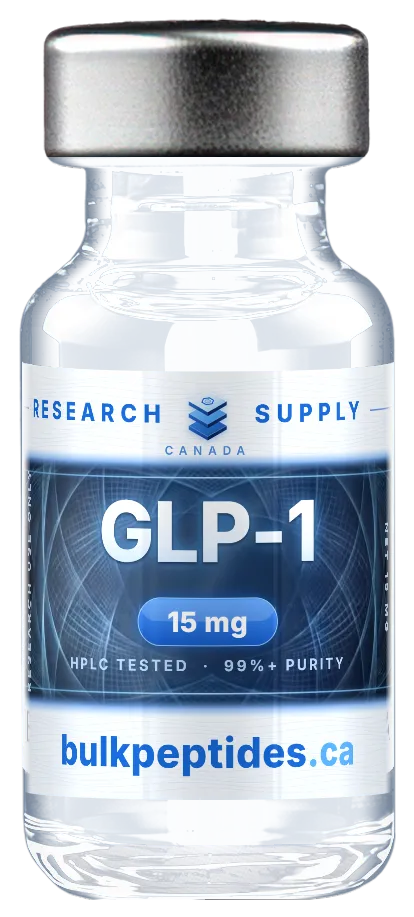
At Bulk Peptides, products are third-party tested for HPLC purity, and certificates are published for some products on our certificates of analysis page. Vials are matched to their certificate by cap and crimp colour. If the certificate for a lot you are considering is not posted, contact us before ordering and we will tell you what we have on file. Our explainer on what third-party testing measures covers the analytical side in more depth.
Every compound sold by Bulk Peptides is for in-vitro laboratory research only. None is intended for human or veterinary use, and a certificate of analysis does not make research material suitable for either.