Peptide Solubility: Choosing a Solvent for HPLC and In-Vitro Work
When a research peptide refuses to go into solution, the usual suspect is the solvent, not the material. Peptide solubility follows fairly predictable rules set by charge and hydrophobicity, so a few minutes with the sequence can save a failed HPLC injection or a cloudy assay stock. This guide is written for analytical and in-vitro laboratory work: preparing samples for chromatography, mass spectrometry and cell-free or cell-based assays. For labs handling many vials from a bulk order, it also covers how to turn solvent choice into a standard procedure so every analyst prepares the same compound the same way.
Start with the sequence, not the bottle
Two properties decide most solubility behaviour: the peptide’s net charge at the pH you plan to use, and the share of hydrophobic residues.
To estimate net charge at around neutral pH, give each basic group roughly +1 and each acidic group roughly -1:
- Basic: arginine, lysine and a free N-terminal amine each count about +1. Histidine is only partly charged near neutral pH, so treat it as a small positive contribution.
- Acidic: aspartate, glutamate and a free C-terminal carboxyl each count about -1.
- Modified termini: an acetylated N-terminus or an amidated C-terminus removes that terminal charge.
Then look at hydrophobicity. A sequence dominated by leucine, isoleucine, valine, phenylalanine, tryptophan or methionine, with few charged residues, will resist water regardless of pH.
Matching peptide solubility to a first solvent
| Sequence profile | Reasonable first solvent | Watch out for |
|---|---|---|
| Net positive (basic) | Water; if that fails, dilute acetic acid or water with a little TFA or formic acid | Low pH may not suit every downstream assay |
| Net negative (acidic) | Water; if that fails, a dilute volatile base such as ammonium bicarbonate | Basic pH speeds deamidation and disulfide formation in cysteine peptides |
| Near neutral or strongly hydrophobic | A small volume of organic solvent (acetonitrile, DMSO or DMF) first, then slow dilution with water or buffer | DMSO can oxidise cysteine and methionine; organic content must suit the assay or column |
A common mistake is reaching straight for neutral phosphate-buffered saline. Solubility is typically lowest near a peptide’s isoelectric point, where net charge approaches zero, and salt can reduce it further. Dissolving first in water or a suitable acid or base, then diluting into buffer, often succeeds where direct addition fails.
Solvent choice for HPLC and LC-MS samples
For chromatography, the sample solvent should resemble the starting mobile phase as closely as solubility allows. Injecting a peptide dissolved in a strong organic solvent onto a column equilibrated in mostly water can distort or split peaks, which then look like impurities.
- Water or water with a small amount of acetonitrile and 0.1% TFA or formic acid suits most reversed-phase methods.
- If DMSO is needed, keep the injected volume small relative to the column size.
- For LC-MS, prefer volatile additives such as formic acid or ammonium salts, and avoid non-volatile buffers that suppress ionisation.
- Filter or centrifuge the solution before injection so undissolved particles do not reach the column.
Solvent choice for in-vitro assays
Assay stocks carry different constraints. The solvent must dissolve the peptide at a useful stock concentration, then dilute into assay medium without the peptide crashing out and without the solvent itself affecting the readout.
- Keep the final organic solvent concentration low and identical across all wells, including controls.
- Include a matched solvent-only control, since DMSO, acids and salts can influence cells and enzymes on their own.
- Add stock to medium with mixing rather than the other way round, to avoid local high concentrations that trigger precipitation.
- Check the diluted solution by eye, and ideally by absorbance or light scattering, for haze before using it.
Technique that avoids trouble
- Test a small portion first. For a new compound or lot, trial the solvent on a small quantity rather than committing a full vial.
- Warm the vial before opening. A cold vial draws condensation onto the solid.
- Add solvent gently. Run it down the inside wall and let the solid wet before mixing.
- Mix mildly. Swirl or invert. Vigorous agitation and prolonged sonication can promote aggregation or warm the sample; if a short sonication is used, keep the bath cool.
- Change the solvent, not the force. If material stays undissolved after a few minutes, try the next option in the table rather than shaking harder.
Standardising across a bulk order
For labs using one compound across many vials and several analysts, solubility work should be done once and written down. A short internal procedure might specify the solvent, target stock concentration, mixing method, filtration step and storage of the analytical solution, all tied to the lot number. When a new lot arrives, a quick check on one vial confirms that it behaves the same way before the procedure is applied to the rest.
Once dissolved, peptides are far less stable than as a dry solid. Keep analytical solutions cold, prepare them close to the time of use, and divide longer-term stocks into single-use aliquots frozen at -20 degrees Celsius or below, so repeated freeze-thaw cycles are avoided.
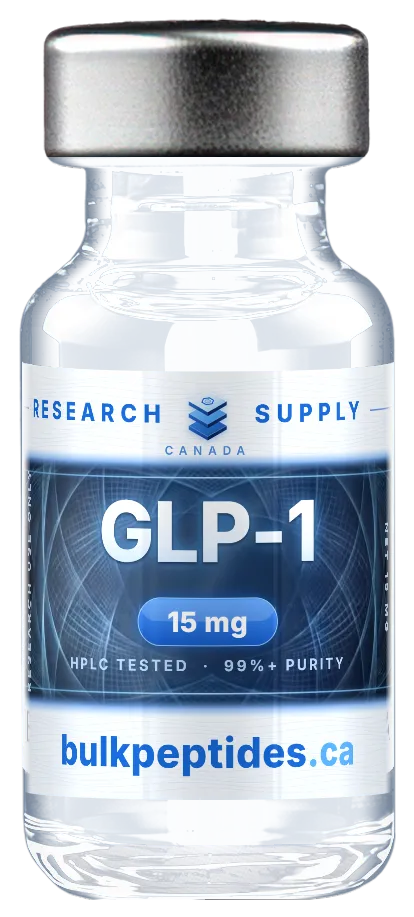
Bulk Peptides has products analysed by an independent laboratory for HPLC purity. Certificates are listed for some products, and cap and crimp colour on the vials links each one to its certificate, which keeps solvent records and lot records aligned.
Everything here concerns analytical chemistry and in-vitro laboratory work. Bulk Peptides materials are research compounds only and are not for use in people or animals.