Peptide Purity Grades: Crude, Desalted and HPLC-Purified Compared
A quote that lists “crude”, “desalted” and “>95%” side by side invites the reader to treat them as three rungs on one ladder. They are not. Peptide purity grades mix two process descriptions with one genuine measured specification, and a purchase order that confuses them can leave a lab holding a large quantity of material that does not suit the work. This guide explains what each label actually promises, why the step from 95% to 98% costs so much more than it looks, and how a lab ordering in volume can write the grade into a request so every lot arrives on the same terms.
Where every grade starts: the cleavage mixture
Solid-phase synthesis finishes with a strong-acid cleavage that frees the chain from its resin and strips the side-chain protection. What comes out is never just the intended peptide. Alongside it sit:
- deletion sequences, each missing a residue where one coupling fell short
- truncated chains that stopped growing early
- molecules still carrying a protecting group
- oxidised forms, particularly of methionine and tryptophan
- scavengers, their adducts and leftover cleavage acid
How much of that mixture is the target depends mostly on chain length and how cooperative the sequence was. A short, well-behaved peptide may come off the resin as mostly target. A long or aggregation-prone one can come off with the target as a minority component. The reason is cumulative: small per-step losses multiply over every coupling, as described in the solid-phase synthesis cycle.
Crude: a label for a process, not a number
Crude material is that cleavage mixture, precipitated, washed and dried, with no chromatographic clean-up. It is quick and inexpensive to make.
The key thing to understand is that “crude” names a step that was skipped. It says nothing about how pure the result is. Two crude peptides of different sequences can sit tens of percentage points apart in real purity while both are labelled correctly. A responsible supplier still measures crude material and reports the figure; if that number is missing, the label only tells you what was not done.
Desalted: cleaner, but barely purer
Desalting passes the crude product over a small bed of sorbent, typically an SPE cartridge or a brief gel-filtration step. That strips out salts, scavengers and small organic residues from the cleavage. It separates by size and broad polarity, not by the fine differences that distinguish one peptide from its near relatives.
Deletion sequences, truncations and oxidised forms behave almost exactly like the target in a desalting step, so they come through with it. What leaves is material that was never peptide to begin with. The benefits are real but modest: easier handling, less interference in later assays, and a weighed mass closer to the actual peptide content. The chromatographic purity figure, however, moves very little.
HPLC-purified: the one true specification
Here, finally, is a grade that commits to a number. The crude peptide is loaded onto a preparative reversed-phase column, eluted with a gradient, and collected as a series of fractions. Each fraction is analysed, the ones that meet the target are combined, and the pool is freeze-dried.
Common targets are >95% and >98%, with >99% available for some sequences. The last few percent are the hardest, because the impurities that remain are the ones most similar to the target: a single missing residue, one extra oxygen, a stereoisomer. Removing them needs a shallower gradient, a second purification on a different selectivity, or a willingness to throw more product away.
Why each step up costs more than it seems
The edges of the main peak hold target mixed with its closest-eluting neighbours. Collecting those edge fractions raises the yield and lowers the purity; discarding them does the reverse. A >98% pool is therefore not just a >95% pool with an extra wash. It is usually a pool built from a narrower slice of the peak, with more of the synthesised material rejected. That lost material, more than instrument time, is what drives the price gap between grades, and it scales directly with order size.
Blind spots shared by all peptide purity grades
Every grade on this list describes chromatographic purity: the share of the detected, eluting signal that belongs to the target. None of them addresses the following.
| Not covered by the grade | Why it matters | How it is measured |
|---|---|---|
| Net peptide content | A lyophilised salt also contains counter-ion and water, so peptide by weight is often well below 100% | Amino acid analysis or nitrogen determination |
| Stereochemical purity | A single D-residue in place of an L-residue has the same mass and may co-elute | Chiral amino acid analysis |
| Hidden co-elution | Anything under the main peak counts as main peak | An orthogonal separation or LC-MS across the peak |
| Residual solvents, metals, endotoxin | Outside what a UV chromatogram can see | Separate dedicated tests |
A grade is also only meaningful alongside the method that produced it. The same pool can read differently at another wavelength, on another column or over a longer gradient. The reasons are covered in what an HPLC area percentage measures, and the weight question in net peptide content explained.
Matching the grade to the work
Higher purity is not automatically better value. The right grade is the lowest one that will not distort the measurement you plan to make.
- Reference standards, structural work and quantitative comparisons need a high-purity pool, because related impurities feed straight into the result.
- Binding or activity screens in vitro usually warrant purified material too, since a closely related impurity may have activity of its own.
- Method development, system checks or use as a general reagent can often use crude or desalted lots and save considerably.
Writing the grade into a bulk order
For a lab buying many vials, or placing repeat orders over a year, the grade is part of the specification and belongs on the paperwork. A few habits keep it consistent:
- State the grade as a measured figure with its method (for example, purity by HPLC at a stated wavelength), not just a word.
- Ask that repeat lots be released against the same method, so figures from different lots can be compared directly.
- Record the grade and the reported figure for each lot in your inventory log on receipt.
- Do not mix grades within one study; a switch from desalted to purified material partway through is a variable of its own.
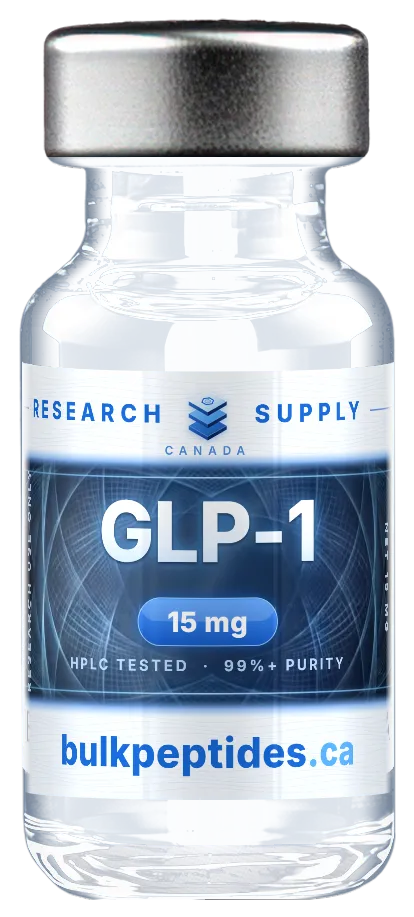
Bulk Peptides products go through third-party HPLC purity testing, and where a certificate has been published for a product, each vial’s cap and crimp colour ties it to the matching document.
Our catalogue is intended only for qualified in-vitro and analytical research. It is not for human consumption or veterinary use of any kind.