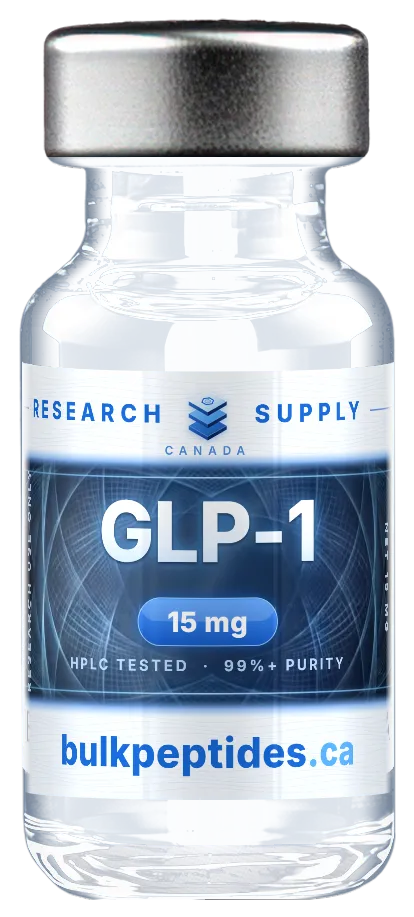
Peptide Lot Numbers: What a Batch Is and How Vials Are Traced
A peptide lot number is a pointer. On its own it tells you nothing about purity or identity; its job is to connect one vial to the batch of material it was filled from, and through that batch to whatever testing was done. Whether that connection is printed as a code on a label or carried some other way, the logic underneath is the same, and it matters most to labs that hold many vials of the same compound over months. This article explains what a batch actually is, what a lot identifier records, and how vials are traced at Bulk Peptides, where the link is made by cap and crimp colour rather than a printed number.
What makes material one batch
The working definition is homogeneity. Material counts as one batch when it came through a single production run and every part of it saw the same conditions, so that any portion is chemically interchangeable with any other. That sameness is what gives a sample test its meaning: if every vial was filled from one well-mixed pool, one vial speaks for the others.
The clearest case is peptide from one synthesis, purified in one pass, freeze-dried in one load and filled in one session. Everything from that run belongs together. The further a process moves away from that picture, the more judgement goes into calling the result a single batch.
Where batch boundaries get blurry
- Several purification runs from one synthesis. Large quantities are often purified in multiple chromatographic passes. The fractions can differ slightly, and whether they form one batch depends on whether they were pooled and mixed before filling.
- Several freeze-dryer loads. If the solution is dried in more than one cycle, residual moisture can vary from load to load, even when the solution itself was uniform.
- Blending of separate syntheses. Combining material from two production runs is a normal operation, but the result is a new population whose impurity profile is a mixture of both parents.
- Later refilling or repacking. Bulk powder divided into vials at a later date creates new units whose link to the original synthesis exists only in records.
None of these is wrong. They simply mean that the word “batch” is doing different amounts of work in different supply chains, and a good traceability system records which steps happened.
What a peptide lot number usually encodes
Where lot codes are printed, they typically combine a date, a running sequence number and sometimes a product code. There is no industry standard for the format. The code means whatever the issuing company’s records say it means, and nobody outside that company can verify it from the vial alone.
In other words, a lot identifier is only a cross-reference. Its use is to pair a vial with the right certificate, and to show which other vials came from the same material if one of them ever raises a question. That is a modest function, but a very useful one when something unexpected turns up in your data.
Traceability without a printed lot number
Bulk Peptides vials do not carry printed lot numbers. Instead, each vial is matched to its certificate by the colour of its cap and crimp. The colour pairing does the same referential job a lot code would: it identifies the group of vials a given certificate applies to.
For a lab receiving a multi-vial order, that has a practical consequence. Caps are normally removed at first use, so the pairing needs to be captured before anyone opens a vial. A simple receiving routine:
- On arrival, record each compound’s cap colour and crimp colour together, along with the certificate that pairing corresponds to.
- Assign your own internal inventory code to each colour group, and label the box or tray with it.
- Write the date received and the number of vials in each group.
- If individual vials will be separated from their box, add your internal code to each vial before the cap is removed.
- When a vial is opened, log the date against the same code.
Done this way, a lab has a traceable record that is as good as a printed lot code, and arguably better, because it is tied to your own inventory system rather than to a supplier’s convention.
Why test results belong to a batch
A certificate reports on a particular population of material, not on a compound in general. A result of 98.2% for one batch describes that batch. A second synthesis produces a separate population, and its impurity profile is the part most likely to differ, because it reflects that run’s coupling efficiencies and purification cuts. Our article on the solid-phase synthesis cycle shows where that variation originates.
Some certificates are issued for a specific batch; others are published as representative of a product and describe the batch they were generated from. Both are in ordinary use. The identifier on the document, whether a code or a colour pairing, is what tells you which batch the numbers belong to.
Keeping a volume order consistent
For work that depends on comparing results across months, the simplest protection against batch-to-batch differences is to use one batch throughout. When ordering in quantity:
- Ask for the whole order of each compound to come from a single colour group where stock allows.
- If an order spans more than one group, keep them separate in storage and in your records.
- Note which group was used for each experiment, so any shift in results can be checked against a change of batch.
Our products are third-party tested for purity, and certificates are published for some products on the certificates page. Vial pricing is mix-and-match, so every vial in the cart counts toward the volume break.
Every product referred to in this article is sold for laboratory research, and none of it is intended for people or animals.