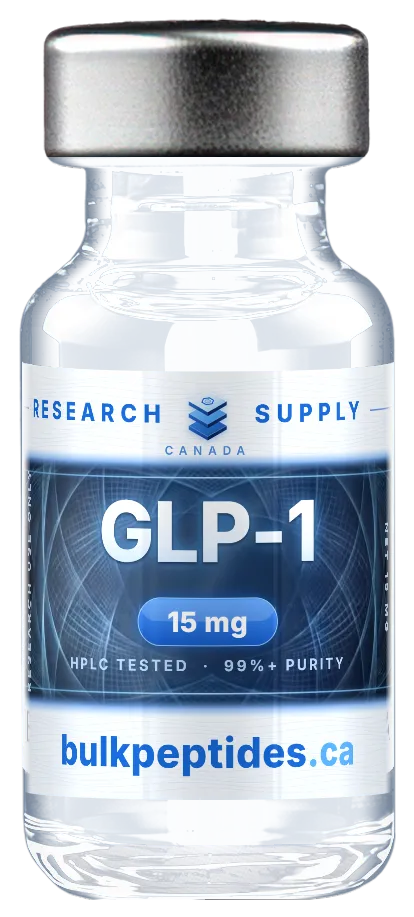
Weighing Lyophilised Peptides: Beating Moisture and Static Errors
On paper, weighing lyophilised peptides is the simplest step in preparing an analytical standard: tare, add powder, read the balance. In practice it is where many concentration errors begin, and they are rarely random. Freeze-dried peptide is light, porous, thirsty for moisture and prone to static, so the mistakes tend to push every result the same way. For QC and research labs working through many vials from a bulk order, a consistent weighing routine is one of the cheapest ways to keep data comparable from week to week and lot to lot.
Four ways the balance reading misleads
| Source of error | What happens | Typical direction |
|---|---|---|
| Moisture uptake | The dry solid absorbs water from the air while it sits on the pan | Reading drifts upward; you weigh water as if it were peptide |
| Static charge | Charged powder clings to tools, flies off the spatula or pushes on the pan | Unstable readings and material lost before it reaches the vessel |
| Temperature difference | A cold vial or vessel sets up air currents and collects condensation | Drifting or falsely low readings, then wet material |
| Weighing below the balance’s reliable range | Tiny masses sit close to the balance’s repeatability limit | Large relative error either way |
The first and third usually combine. Opening a refrigerated vial straight away invites condensation onto the freeze-dried solid, and the mass then includes water that was never part of the product.
Why freeze-dried peptides are so hygroscopic
Lyophilisation leaves a highly porous solid with a very large surface area. That is what lets it dissolve quickly, and it is also what lets it take up atmospheric moisture fast. Many peptides also carry charged groups and counter-ions that attract water. On an open balance in a humid room, the displayed mass can creep upward within a minute or two.
The effect is seasonal in much of Canada. Humid summer air makes drift worse, while dry, heated winter air tends to make static the bigger problem. A method that works well in January may need adjusting in July.
A practical routine for weighing lyophilised peptides
- Equilibrate first. Let the sealed vial reach room temperature before opening, typically at least 30 minutes for a vial from the fridge and longer from the freezer. Keep it sealed while it warms.
- Know your balance’s limits. Check the minimum reliable weight for your balance and method. A microbalance or semi-micro balance may be needed for single-milligram quantities.
- Control static. Use an ionising blower or antistatic gun near the pan, prefer metal spatulas and glass or antistatic weighing vessels over ordinary plastic, and avoid rubbing gloves on vessels.
- Weigh by difference. Weigh the closed vessel containing the powder, transfer the portion you need, then reweigh. The loss is the mass delivered, and it sidesteps powder left on a boat.
- Be quick and closed. Keep container lids on except during transfer, use the balance draft shield, and reseal the stock vial promptly.
- Record the conditions. Note room humidity, balance ID and the lot number alongside each weighing.
For very demanding work, a low-humidity enclosure or glove box removes most of the moisture problem, though it is rarely necessary for routine analytical preparation.
Skip the partial weighing altogether
Often the most accurate approach is not to weigh a portion at all. Instead, dissolve the entire contents of a vial in a measured volume of a suitable analytical solvent, then prepare working concentrations by dilution. This removes hygroscopic drift and static losses in one move, and it relies on the vial’s stated content rather than a small, error-prone weighing.
The cost of this approach is that a full vial gets used up in one session. For labs buying in volume, that is usually manageable: plan the stock volume, divide it into single-use aliquots for analytical runs, and store those aliquots appropriately. When concentration must be known precisely, confirm it independently, for example by UV absorbance for sequences containing tryptophan or tyrosine, or by amino acid analysis.
From gross weight to peptide weight
Even a perfect weighing gives you the mass of the solid, not the mass of peptide. The solid also contains counter-ions (often trifluoroacetate or acetate) and residual water. To convert a gross weight into a peptide amount:
- Use the net peptide content from the certificate where it is reported, typically determined by amino acid analysis or nitrogen analysis.
- If only water content (for example by Karl Fischer titration) and counter-ion content are available, they can be used to estimate peptide mass.
- If none of these are available, record that concentrations are expressed on a gross-weight basis, so later comparisons are made on the same footing.
Our products are sent to an independent laboratory for HPLC and purity testing. Certificates are posted for some products, and cap and crimp colour on each vial shows which certificate applies, which makes it easier to use the right figures when a receipt contains more than one lot.
Troubleshooting inconsistent results between sessions
If the same stock seems to give different concentrations on different days, check these before blaming the material:
- Was the vial opened cold on one occasion?
- Did room humidity differ markedly between sessions?
- Was a different balance, spatula or weighing vessel used?
- Was the mass near the lower limit of the balance?
- Were the two sessions drawing on different lots with different salt forms or content?
A short weighing log answers most of these questions in seconds, which is why it is worth keeping for any compound used across a long series of experiments.
The guidance above applies to analytical and in-vitro sample preparation only. Bulk Peptides compounds are supplied for laboratory research and must not be used in people or animals.